


Property Tax Amendment 3
The City of Palm Coast is providing factual information so residents can understand how the proposal could affect the Palm Coast portion of their property tax bill and the revenue available for City services. The City is not advocating for or against Amendment 3.
Proposed Property Tax Amendment 3
The Florida Legislature voted to place a proposed constitutional amendment on the November 2026 ballot. If approved by at least 60% of voters, the amendment would increase homestead exemptions for homeowners who use their property as a primary residence in Florida. Below is a summary. For more information, read the full legislation HJR 1F (Joint Resolution) and SB 4F (General Bill).
New Homestead Exemption
Creates a new homestead exemption of $150,000 in 2027 and $250,000 in 2028, applicable to all levies excluding school districts.
Non-homestead Assessment Cap
Reduces the assessment cap on non-homestead properties (e.g. second homes and commercial real estate) from 10% to 5%.
Residency Requirement
Requires a five-year Florida residency period before new residents qualify for the expanded exemption.
Automatic Inflation Growth
Grows both exemptions automatically with inflation each year.
Millage Rate Ceiling Narrowed
Changes the rules for setting property tax rates. The City could adopt the roll-back rate or up to 110% of that rate with a two-thirds vote. A rate above 110% would require a unanimous vote of the City Council.
Estimated Impact
Based on estimates from the City’s Finance Department and Florida League of Cities data, the proposed homestead exemption could reduce Palm Coast property-tax revenue by about $12.4 million in 2027 and $21.7 million in 2028.
What Amendment 3 Would Change
If approved by voters, Amendment 3 would increase the homestead exemption for non-school property taxes to $150,000 in 2027 and $250,000 in 2028. It would also reduce the annual assessment-growth cap on non-homestead property from 10% to 5%.
Other provisions address eligibility for the expanded exemption, future inflation adjustments, and local property-tax rules.
Estimated Impact to Palm Coast
Based on Florida League of Cities estimates provided to the City, the expanded homestead exemption is expected to reduce Palm Coast property-tax revenue beginning in 2027. Finance is using the Florida League of Cities analysis for these estimates.
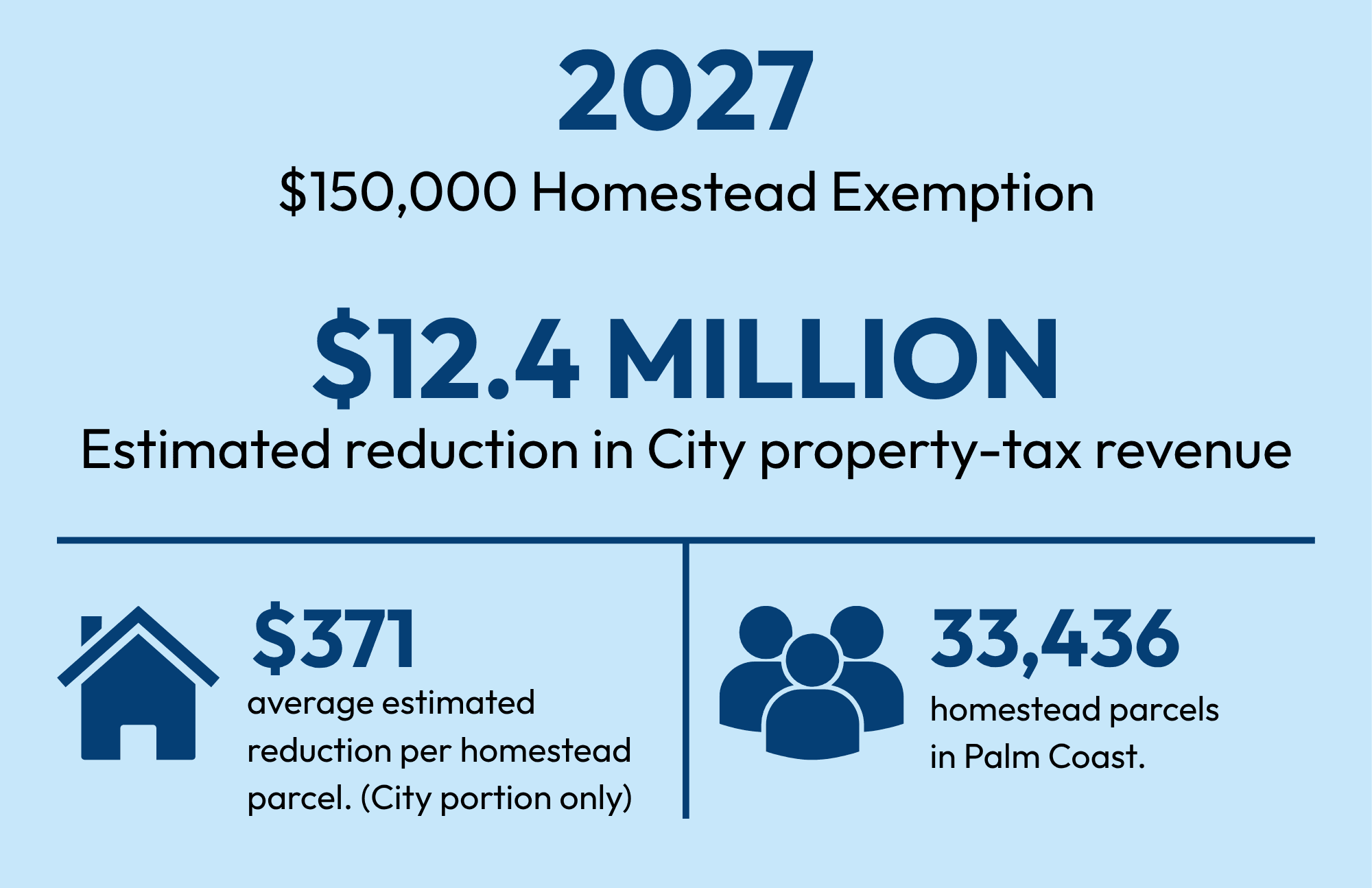
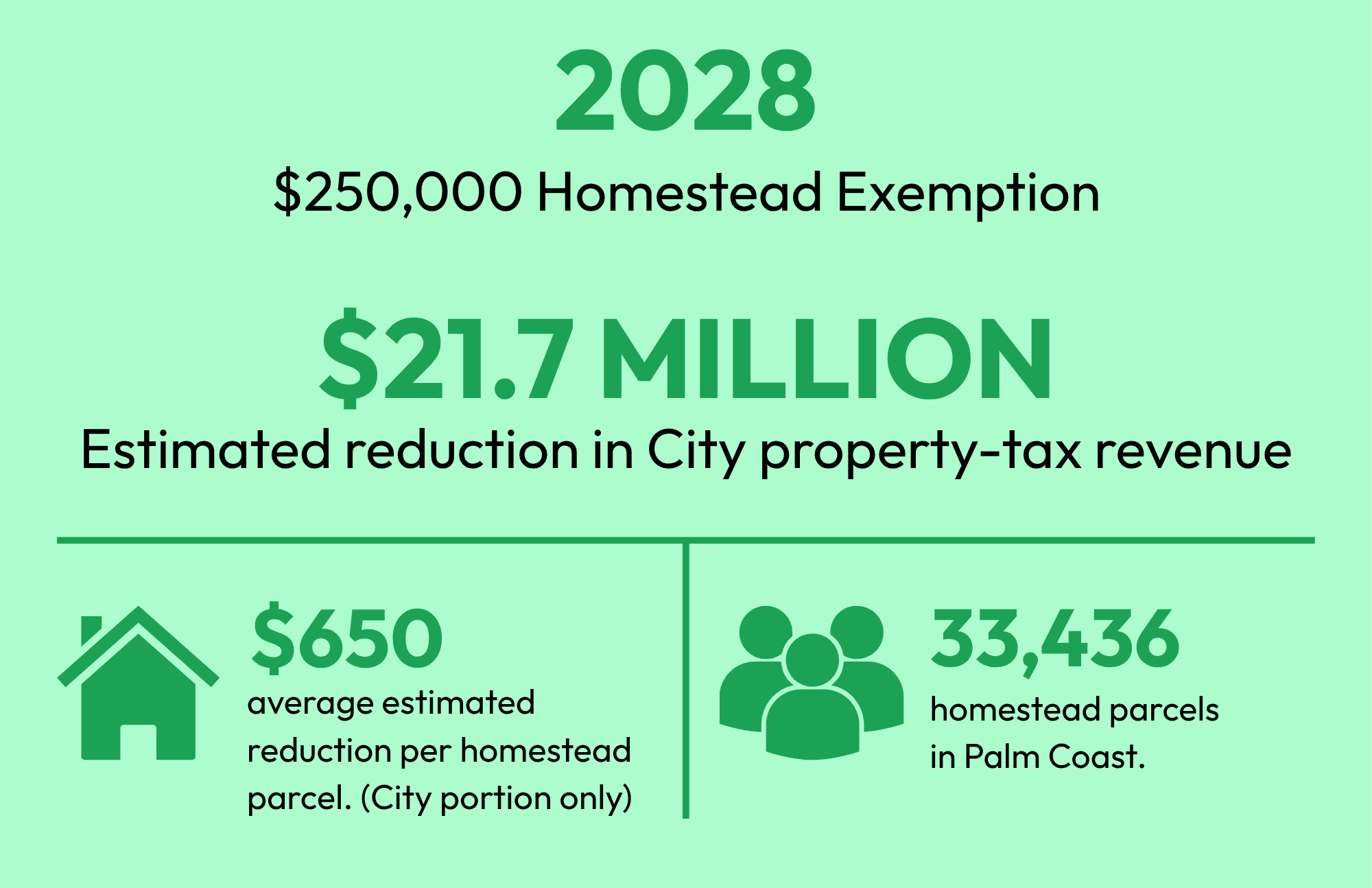
IMPORTANT: These estimates reflect the expanded homestead exemption. The City does not currently have a separate estimate for the financial impact of reducing the non-homestead assessment-growth cap to 5%.
Understanding the City Budget
Ad valorem property taxes support a significant portion of Palm Coast's General Fund, which funds many of the City's day-to-day services.
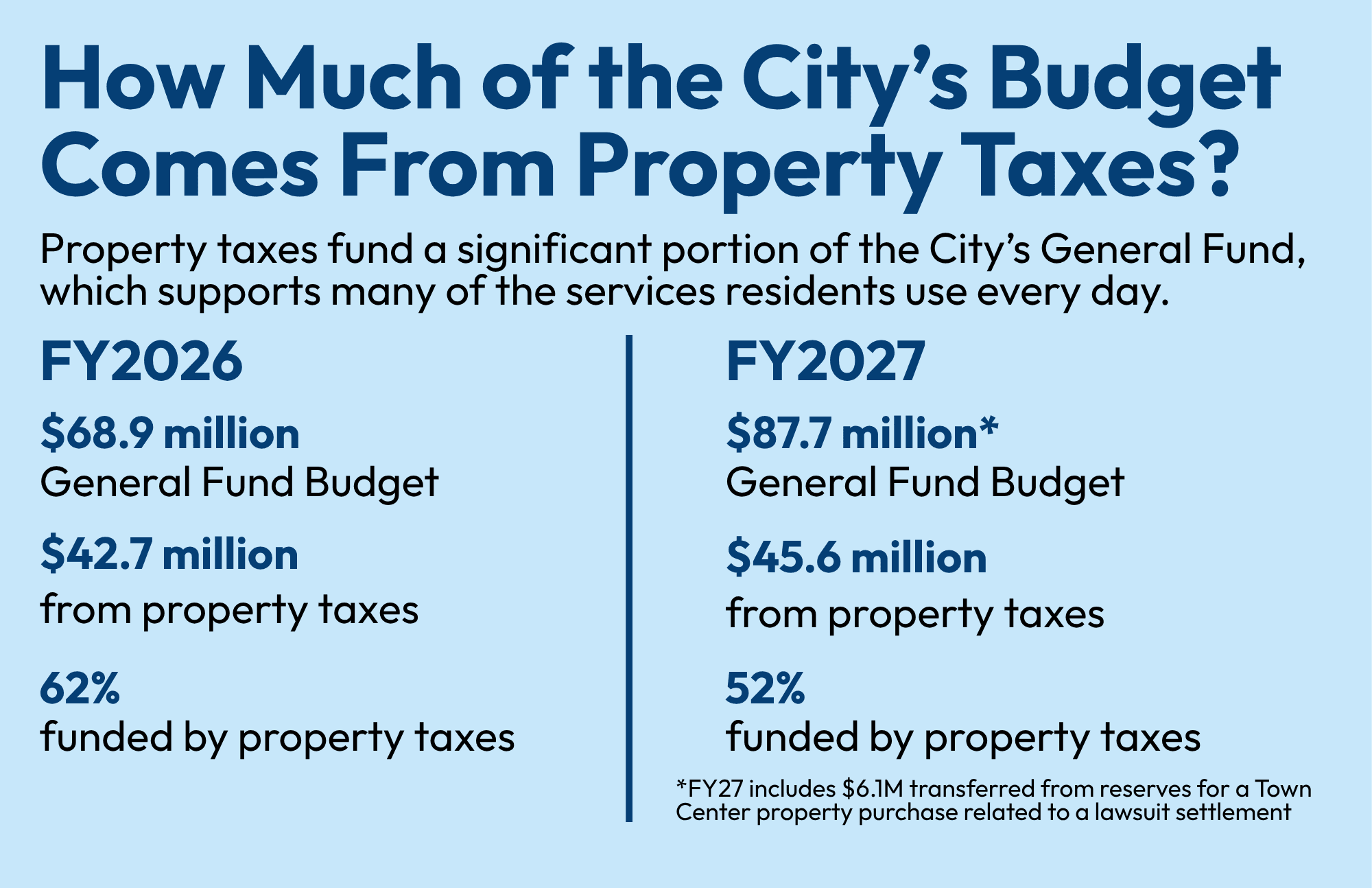
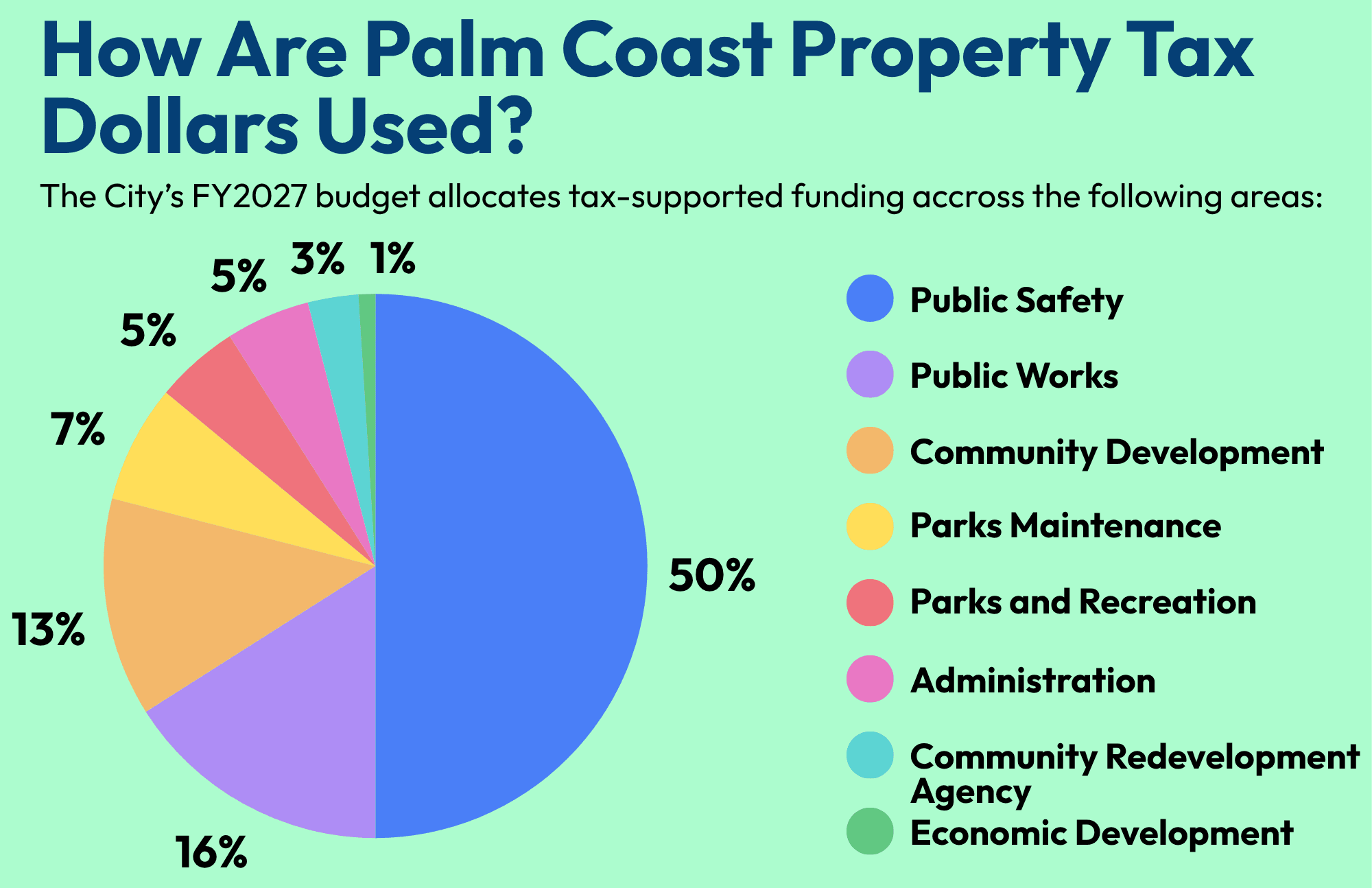
These percentages reflect expenditures attributable to tax revenue after other funding sources have been excluded. Other City revenues may also support these services.
The percentages above show how tax-supported funding is currently distributed. They do not represent projected reductions to individual departments or services.
Frequently Asked Questions
A homestead property is a homeowner's primary residence that qualifies for Florida's homestead exemption and Save Our Homes benefits. Vacation homes, rental properties, and investment properties generally do not qualify.
The current homestead exemption is typically $50,000; the proposed amendment would increase the homestead exemption from the typical $50,000 to $250,000 over two years. It would also direct the Florida Legislature to establish a schedule for fully eliminating non-school property taxes on homestead properties.
While the proposal would reduce property taxes for qualifying homeowners, it would also significantly reduce a major source of funding for local government services. Residents would continue to expect the same level of service, but the City of Palm Coast would have fewer resources available to meet the growing demand for public safety, infrastructure, and other essential services.
The Florida League of Cities estimates the amendment would reduce the City's property tax revenue by approximately $12.4 million in 2027 and $21.7 million in 2028. These projected reductions would affect the City's ability to fund services, maintain infrastructure, and address the needs of a growing community.
Property taxes help fund services residents rely on every day, including public safety, roads, parks, libraries, stormwater infrastructure, and environmental programs. Revenue reductions of this scale could require difficult decisions regarding service levels, capital projects, and future investments.
Public safety represents one of Palm Coast's largest budget commitments. While no decisions have been made, a significant reduction in revenue could make it more challenging to maintain staffing levels, expand services to meet population growth, and invest in future public safety needs.
The proposal could affect more than homeowners. Renters, businesses, and visitors also rely on City services and infrastructure. Because commercial and rental properties would not receive the same benefit, property owners could face higher tax burdens, which may be passed along to tenants through higher rents.
Local governments have limited authority under Florida law to create new taxes or increase existing revenues. There is no single revenue source currently available that would fully replace a loss of this magnitude, meaning City leaders would likely need to consider a combination of spending reductions, fees, and other legally authorized revenue options.
The legislation currently under consideration does not include a recurring source of state funding sufficient to offset Palm Coast's projected long-term revenue losses. Local governments would therefore remain responsible for addressing any resulting budget shortfalls.
Yes. The proposed exemption applies only to non-school property taxes. For many homeowners, school taxes represent the largest portion of the annual property tax bill. Even with a larger homestead exemption, most homeowners would still receive a property tax bill and remain subject to the same collection requirements.
No. The City of Palm Coast's intent is to provide factual information so residents can make informed decisions. State law prohibits local governments from using public resources to advocate for or against a ballot measure. Individual elected officials, however, may express their personal views.