


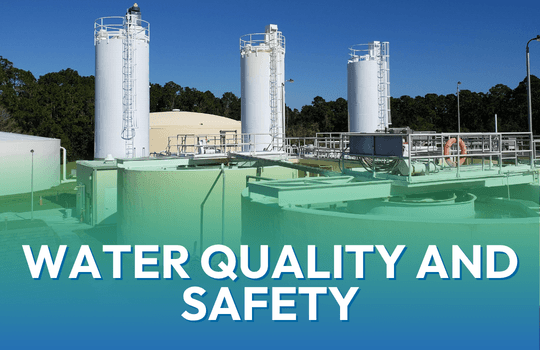
Water Quality and Safety
Learn where Palm Coast’s drinking water comes from, how it’s treated, and how it’s tested to meet all regulatory requirements. This page explains common water questions, aesthetic changes like color or smell, and who to contact if you have concerns.
Navigation Menu
Is Palm Coast’s Water Safe to Drink?
Yes. Palm Coast’s drinking water meets or exceeds all regulatory requirements. The City conducts regular testing throughout the water system and reports results to state regulators under federal EPA regulations to ensure compliance and protect public health.
Water testing
- Continuous monitoring 365 days a year
- Over 100 sampling locations are tested monthly
- Independent certified labs perform analyses
- Compliance: meets state and federal primary drinking water regulatory requirements
- Annual Water Quality Report
System Improvements Underway
Palm Coast is investing $500+ million in upgrades, including expanding treatment plant capacity, rehabilitating and expanding raw water and well systems, optimizing treatment processes, balancing supply and demand, upgrading technology, and enhancing water quality.
What Are Drinking Water Standards?
Drinking water standards are science-based limits and guidelines established by the U.S. Environmental Protection Agency (EPA) to ensure public water is safe to drink. These standards identify acceptable levels of contaminants in drinking water and help utilities monitor, treat, and report water quality.
Learn More:
Drinking Water Regulations: https://www.epa.gov/dwreginfo/drinking-water-regulations
Primary Drinking Water Standards
Primary standards are legally enforceable limits created to protect public health. They set maximum contaminant levels for substances that could cause illness or other health concerns and require public water systems to test and treat water to meet those limits.
Learn More:
National Primary Drinking Water Regulations: https://www.epa.gov/ground-water-and-drinking-water/national-primary-drinking-water-regulations
Secondary Drinking Water Standards
Secondary standards are non-enforceable guidelines that address aesthetic qualities such as taste, odor, and color. While these characteristics typically do not pose health risks, they help utilities maintain overall water quality and customer confidence.
The City of Palm Coast monitors water quality in accordance with EPA and Florida Department of Environmental Protection requirements to ensure drinking water meets all primary standards while also working to reduce aesthetic concerns identified under secondary guidance.
Learn More
National Secondary Drinking Water Regulations: https://www.epa.gov/sdwa/secondary-drinking-water-standards-guidance-nuisance-chemicals
View the 2024 Annual Water Quality Report
DEP Water Testing Results
The City of Palm Coast collects hundreds of water quality samples each month, and performs required quarterly, annual, and tri-annual samples per FDEP regulations. All results are published online and available for public review at any time. Below, you’ll find how to access these reports and a simple guide to understanding the results.
DEP Water Quality Report Dashboard
Residents can independently view the City of Palm Coast’s full water sample testing results at any time through the Florida Department of Environmental Protection’s Public Access Document Management System, which publishes the complete, official reports for public review.
Did you know that the City of Palm Coast routinely samples your water supply over 100 times per month? View this step-by-step guide on how to access these reports from the Department of Environmental Protection.
Learn More About Your Water Treatment Plants
Water Treatment Plant #1
Water Treatment Plant #1 was built in 1977 and expanded in 1982. It is classified as a conventional lime-softening and filtration plant.
Learn More!Water Treatment Plant #2
Water Treatment Plant #2 is located in the southern portion of the city. Water Treatment Plant #2 was designed, permitted and built in the early 1990’s.
Learn More!Water Treatment Plant #3
Water Treatment Plant #3 was designed, permitted, and ultimately constructed from 2006-2008, and placed in operation in July 2008.
Learn More!Learn More About Your Wastewater Treatment Plants
Wastewater Treatment Plant #1
Wastewater Treatment Plant #1, located at 26 Utility Drive, was the first plant built in the late 1970s by ITT Corporation in Palm Coast.
Learn More!Wastewater Treatment Plant #2
Wastewater Treatment Plant #2 is located at 400 Peavey Grade. This facility was constructed and placed online in 2018.
Learn More!